Supplement FAQs: Most Asked Questions in Pakistan Answered
Every week, thousands of Pakistanis search online trying to figure out the basics: Is it safe to take two supplements together? Should I take vitamins with food or without? Are…
Every week, thousands of Pakistanis search online trying to figure out the basics: Is it safe to take two supplements together? Should I take vitamins with food or without? Are imported supplements actually better? These questions come up constantly, and honestly, good answers are hard to find. Most health sites either give vague generic advice or completely ignore Pakistan’s specific context.
So here’s a proper answer to the most asked supplement questions Pakistan has. Real answers, no fluff, based on how supplements actually work for Pakistani diets, lifestyles, and health conditions.
General Supplement Questions
Do I actually need supplements if I eat a balanced diet?
Technically, a perfect diet would cover your nutritional needs. But here’s the thing: most Pakistanis don’t eat a perfectly balanced diet. Research shows that 70-80% of the Pakistani population is Vitamin D deficient, despite us getting plenty of sunlight. Vitamin B12 deficiency is extremely common, especially in people who eat limited meat or dairy. Iron deficiency anemia affects a huge proportion of women and children.
Beyond deficiencies, there are also therapeutic needs. Someone dealing with PCOS needs specific nutrients like myo-inositol and folate at doses you can’t get from food alone. A man with fertility concerns needs targeted antioxidants at clinical doses. These are situations where supplements genuinely fill a real gap.
So: no, you don’t automatically need supplements just to exist. But most people do benefit from at least a few targeted ones based on their specific health needs.
How do I know which supplements are right for me?
Start with a blood test. A basic panel covering Vitamin D, B12, CBC (complete blood count), ferritin (iron stores), and thyroid function costs around PKR 2,000-5,000 at most labs. This tells you what you’re actually deficient in versus what you’re guessing about.
After that, match your symptoms to likely deficiencies. Fatigue and brain fog point toward B12, iron, or Vitamin D. Hair fall commonly links to biotin, zinc, or iron. Joint pain often involves Vitamin D and calcium. PCOS symptoms respond well to myo-inositol. Skin dullness or uneven tone often improves with glutathione and Vitamin C.
If you have a chronic condition or are on medication, talk to your doctor before starting new supplements. Some combinations require medical guidance.
Are supplements safe to take long-term?
Most vitamins and minerals are safe long-term at appropriate doses. Vitamin D, B12, magnesium, zinc, folate, and most herbal supplements have excellent safety profiles when taken at recommended doses. The key phrase is “recommended doses.”
Fat-soluble vitamins (A, D, E, K) can accumulate in the body, so you shouldn’t take mega-doses without monitoring. Water-soluble vitamins (B-complex, Vitamin C) are generally safer because excess is excreted through urine. Some supplements interact with medications (like Vitamin K and blood thinners), so always mention what you’re taking to your doctor.
The general rule: therapeutic courses of targeted supplements are typically 3-6 months, then reassess. Basic maintenance supplements (Vitamin D, B12, magnesium) are fine indefinitely for most healthy adults.
Dosage and Timing Questions
Should I take supplements with food or on an empty stomach?
It depends on the supplement type:
- Fat-soluble vitamins (A, D, E, K): Always take with food that contains some fat. Vitamin D absorption increases dramatically when taken with a meal. Vit KD (D3 10,000 IU + K2) should be taken with your main meal.
- Magnesium: Best taken with food to reduce potential digestive discomfort. Evening with dinner works well, and it may support sleep quality too. Calco Fit (magnesium glycinate) is gentle enough for most people but still better with food.
- Iron: Actually absorbs better on an empty stomach, but it causes nausea in many people. Taking it with a small amount of food is a reasonable compromise. Pair with Vitamin C to enhance absorption.
- B vitamins and Vitamin C: Can be taken any time, but morning is practical since B vitamins support energy production and can be mildly stimulating for some people.
- Probiotics: Generally best 30 minutes before a meal or with a cool drink, not hot food.
- Myo-inositol (M-Sol): Can be taken with or without food. Many women split the dose — morning and evening — for consistent blood levels.
Can I take multiple supplements at the same time?
Usually yes, but a few combinations either interact negatively or compete for absorption:
Avoid taking at the same time:
- Calcium and iron: They compete for absorption. Take at different times of day.
- Zinc in high doses and copper: High zinc supplementation can deplete copper over time. If taking zinc long-term, use zinc-copper balanced formulas.
- Fat-soluble vitamins in very high doses together: Space out mega-doses of A, D, E, K if taking multiple.
These combinations actually work well together:
- Vitamin D3 + K2: K2 directs calcium to bones rather than arteries — Vit KD combines these intelligently.
- Vitamin C + iron: Vitamin C significantly enhances non-heme iron absorption.
- Vitamin C + glutathione: Vitamin C helps regenerate glutathione and extends its effectiveness — this is why Gluthic pairs well with Cee or Asco C.
- Magnesium + Vitamin D: Magnesium is required for Vitamin D metabolism. Low magnesium actually limits how well Vitamin D works.
What happens if I miss a dose?
For most supplements, missing a day isn’t a crisis. Nutrients build up in your system over days and weeks — one missed dose doesn’t undo a month of consistent use. Just continue with your next scheduled dose. Don’t double-dose to make up for the missed one.
Consistency over weeks and months matters far more than any single day. A supplement taken 5-6 days a week consistently for 3 months will do more than one taken perfectly for 2 weeks then forgotten.
Product Quality Questions
Are local Pakistani supplements as good as imported ones?
In many cases, yes — and sometimes better for Pakistani conditions. Here’s why:
First, quality local supplements from registered pharmaceutical companies go through DRAP (Drug Regulatory Authority of Pakistan) registration, which includes manufacturing standards, quality control testing, and ingredient verification. A DRAP-registered product isn’t just some random powder in a capsule.
Second, formulation matters more than country of origin. A local supplement with the correct clinical dose of an active ingredient (like M-Sol with properly dosed myo-inositol) beats an imported supplement with a trendy label but insufficient dosing.
Third, imported supplements can have supply chain issues that affect quality. Products sitting in customs or stored improperly in heat lose potency. A fresh local supplement beats a degraded imported one every time.
That said, some specialized supplements aren’t yet manufactured locally at clinical quality. In those cases, imported options from reputable brands are fine.
How do I know if a supplement is genuine vs fake?
Counterfeiting is a real problem in Pakistan’s supplement market. Here’s how to protect yourself:
- Check DRAP registration: Legitimate supplements have a registration number on the packaging. You can verify it on the DRAP website.
- Buy from authorized sellers: Purchase directly from the brand’s website, their authorized distributors, or reputable online stores. Avoid random Daraz sellers with no track record.
- Inspect packaging: Genuine products have consistent print quality, proper seals, batch numbers, and expiry dates. Vague or poorly printed labels are a red flag.
- Compare prices: If a supplement is selling at 30-40% below market price, something is wrong. Legit discounts are usually 10-15% maximum.
- Check the seal: Any genuine supplement should have tamper-evident sealing. Broken or missing seals — return it immediately.
What does “clinically dosed” actually mean?
A supplement is “clinically dosed” when it contains the exact amount of each active ingredient that was used in research studies showing benefits. For example, studies on myo-inositol for PCOS typically use 2,000-4,000 mg per day. A product claiming myo-inositol benefits but containing only 200 mg isn’t clinically dosed — it’s just marketing.
This is one of the most important things to check. Many cheap supplements “contain” impressive-sounding ingredients but at doses so low they can’t have any measurable effect. Always read the supplement facts panel and compare doses to research literature, or ask a pharmacist.
Specific Condition Questions
Which supplements help with PCOS in Pakistan?
PCOS is the most common hormonal disorder in Pakistani women of reproductive age. The most evidence-backed supplements for PCOS are:
- Myo-inositol: Improves insulin sensitivity and ovarian function. M-Sol Sachet and Simfolic contain this at therapeutic doses.
- Folate/Folic acid: Essential for women trying to conceive. Often combined with myo-inositol.
- Vitamin D: Deficiency worsens PCOS symptoms. Most PCOS patients benefit from Vitamin D supplementation.
- Omega-3: Reduces inflammation and androgen levels.
- Magnesium: Supports insulin sensitivity and reduces anxiety symptoms common in PCOS.
Work with a gynecologist or endocrinologist for a complete PCOS management plan that combines supplements with dietary and lifestyle changes.
What supplements help with male fertility?
Male fertility issues affect a significant portion of couples struggling to conceive. The evidence-backed supplements for male fertility include:
- L-arginine: Improves blood flow and sperm motility. Argivital Sachet is specifically formulated for male fertility support.
- Zinc: Essential for testosterone production and sperm health. Deficiency directly impairs male fertility.
- CoQ10: Improves sperm motility and protects sperm from oxidative damage.
- Vitamin D: Low Vitamin D correlates strongly with poor sperm parameters.
- Antioxidants (Vitamin C, E, selenium): Protect sperm DNA from oxidative stress.
Products like X-Fit and Trimo-M combine multiple male fertility and vitality ingredients in one formula. Sperm generation takes about 3 months, so give these supplements at least 3 months to show results.
Can supplements help with joint and bone health?
Yes, significantly. The evidence is particularly strong for:
- Glucosamine + Chondroitin: Help maintain cartilage integrity. Flex-4 combines these with other joint-supporting ingredients.
- Vitamin D3 + K2: Critical for calcium absorption and directing it to bones, not arteries. Vit KD addresses this directly.
- Magnesium glycinate: Supports bone density and muscle function. Calco Fit uses the highly bioavailable glycinate form.
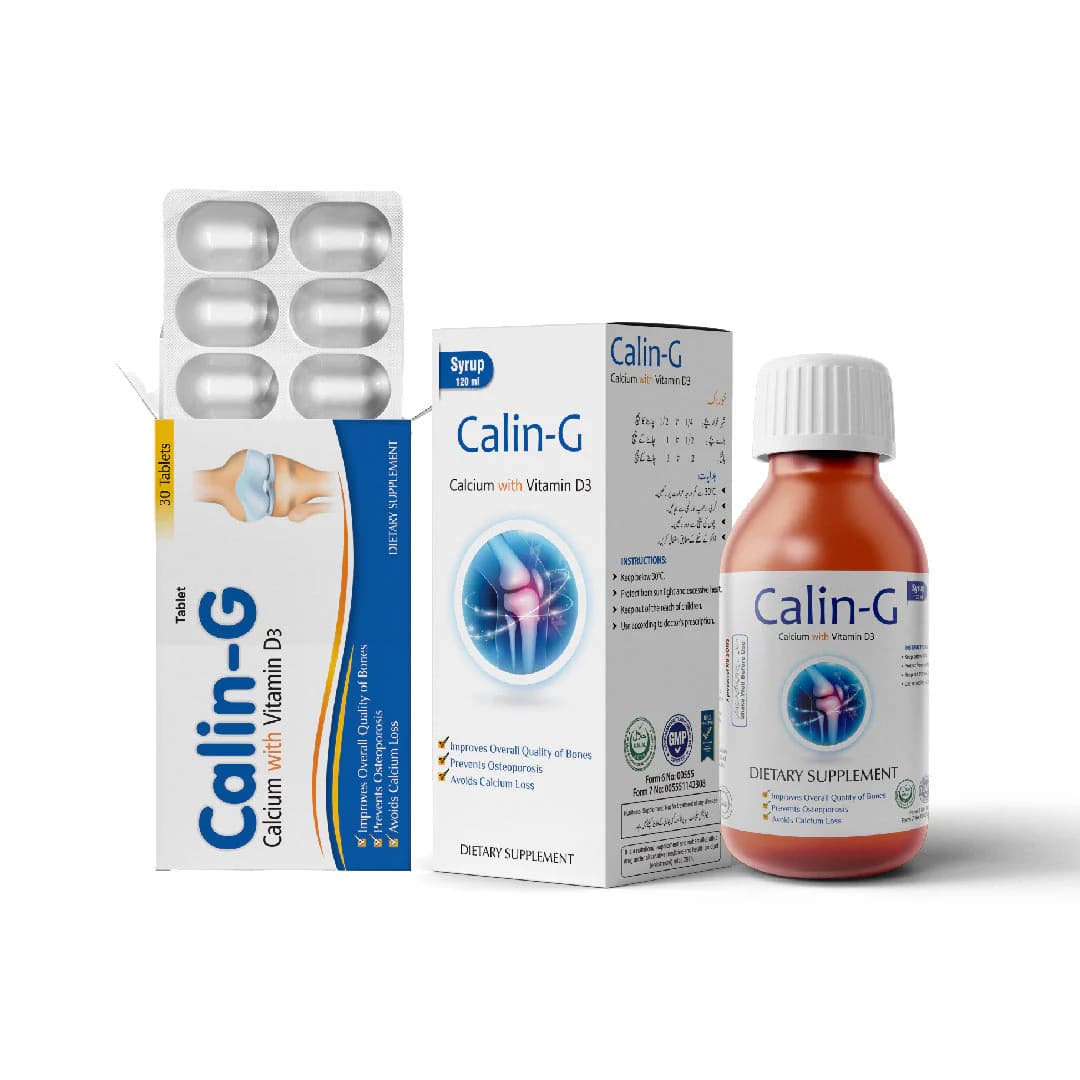
- Calcium lactate gluconate: A gentle, highly absorbable form of calcium without the digestive issues of calcium carbonate. Calosent uses this form.
- Collagen: Provides structural support for joints and connective tissue.
For people already experiencing joint pain, anti-inflammatory approaches (omega-3, turmeric/curcumin) combined with structural support (glucosamine, collagen) work best together.
What’s the best supplement for skin brightening in Pakistan?
Skin brightening from within works through a few mechanisms: reducing melanin production, protecting skin from oxidative damage, and supporting skin cell renewal.
- Glutathione: The gold standard for skin brightening from within. It inhibits melanin synthesis at the enzymatic level. Gluthic delivers reduced glutathione in a form that survives digestion.
- Vitamin C: Inhibits melanin synthesis independently and regenerates glutathione. Cee 500mg or the effervescent Asco C work well alongside Gluthic.
- Collagen: Supports skin firmness and reduces the appearance of pigmentation over time.
Realistic expectation: skin brightening supplements work, but they take 8-12 weeks of consistent use to show noticeable results. Anyone claiming results in 1-2 weeks is overselling.
Buying and Storage Questions
Where is the safest place to buy supplements in Pakistan?
The safest options in order:
- Direct from brand website: For Yellow Pink products, yellowpink.pk is the most reliable source. You’re buying directly from the importer/distributor, guaranteeing authenticity.
- Established pharmacies: Large pharmacy chains or well-known local pharmacies with verified supply chains.
- Reputable online stores: Only from sellers with clear return policies, visible business information, and genuine customer reviews.
Avoid: random Daraz or Facebook Marketplace sellers without verifiable track records, suspiciously cheap prices, products with no DRAP registration details, and anything that promises dramatic results in unrealistically short timeframes.
How should I store supplements?
Pakistan’s climate makes storage particularly important. Heat and humidity degrade supplements faster than in cooler countries.
- Store at room temperature away from direct sunlight. A drawer or cabinet, not a bathroom shelf (too humid) or kitchen counter (too warm).
- Keep original packaging. Supplement bottles are designed to protect contents from light and moisture.
- Don’t refrigerate unless specifically instructed — condensation from repeated temperature changes can damage capsules and tablets.
- In Karachi or other coastal areas with high humidity, particularly check expiry dates and avoid buying in bulk quantities you can’t use before the date.
- Sachet-form supplements (like M-Sol) are actually well-protected against humidity compared to open bottle formats.
Can I take supplements during Ramadan?
Yes, you can take supplements during Ramadan — just adjust the timing. The most practical approach is:
- Sehri (pre-dawn meal): Take fat-soluble vitamins (D, K, A, E), magnesium, and any supplements that benefit from food. This is your main opportunity with a proper meal.
- Iftar (breaking fast): A good time for water-soluble supplements, Vitamin C, and anything that can be taken with dates and water.
- After Iftar meal: Best for iron and any supplement that requires a fuller meal for proper absorption.
Fasting actually increases absorption of many nutrients (the gut is more receptive after a fast), so you may find supplements more effective during Ramadan than usual. Post-Ramadan, many people experience nutrient depletion from altered eating patterns — a good time to reassess your supplement needs.
Frequently Asked Questions (Quick Answers)
Can children take adult supplements?
No, not without medical guidance. Children have different dosing requirements based on age and weight. Adult doses of Vitamin D, zinc, and iron can be too high for children and cause toxicity. Use children’s formulations or consult a pediatrician for appropriate dosing.
Do supplements expire?
Yes. Supplements past their expiry date may be less potent (active ingredients degrade) but aren’t usually dangerous. That said, always use within the expiry date for guaranteed effectiveness. Store properly to maximize shelf life.
Is it okay to take supplements while pregnant?
Some are essential, some are fine, and some should be avoided during pregnancy. Folic acid and prenatal vitamins are critical. High-dose Vitamin A (retinol form) should be avoided. Always discuss with your gynecologist or OB-GYN before starting or continuing any supplement during pregnancy.
Why do some supplements make urine bright yellow?
That’s riboflavin (Vitamin B2). It’s water-soluble and excess is excreted through urine, giving it a bright yellow color. It’s harmless and actually indicates your body is processing the B vitamins. If you’re taking a B-complex, expect neon yellow urine — it’s normal.
Can supplements replace a healthy diet?
No. Supplements supplement a diet — they don’t replace it. Whole foods contain fiber, phytochemicals, and nutritional co-factors that work synergistically in ways supplements can’t fully replicate. Think of supplements as insurance and targeted therapy, not as a substitute for real food.
The Bottom Line
The most important thing about supplements isn’t which brand you choose or how expensive they are. It’s whether you actually need them, whether you’re taking the right dose, and whether you’re consistent enough for them to work. Most Pakistanis who feel like “supplements don’t work” simply tried the wrong product at the wrong dose without giving it enough time.
Start with a blood test to identify actual deficiencies. Then choose quality, clinically-dosed supplements from registered manufacturers. Take them consistently at the right time relative to food. Give it 8-12 weeks for most conditions to see real results.
If you have specific questions about Yellow Pink products or which supplements suit your particular health concern, browse the full product range or contact us directly.