Ashwagandha Benefits in Pakistan: Complete Guide for Stress & Energy 2026
Walk into any supplement store in Pakistan right now and you will probably see ashwagandha on the shelves. Ask any fitness enthusiast or anyone dealing with chronic stress — chances…
Walk into any supplement store in Pakistan right now and you will probably see ashwagandha on the shelves. Ask any fitness enthusiast or anyone dealing with chronic stress — chances are they have either tried it or they are curious. Ashwagandha benefits in Pakistan are being talked about more than ever in 2026, and honestly, there are good reasons for that. But there is also a fair amount of confusion about what this herb actually does, who should take it, and what to look for when buying it here.
This guide cuts through the noise. We will cover the science, the practical applications for Pakistani adults, the common mistakes people make, and how to actually pick a quality product. By the end, you will have a clear picture of whether ashwagandha is worth adding to your routine.
What Is Ashwagandha? (And Why Pakistanis Are Talking About It)
Ashwagandha (Withania somnifera) is an adaptogenic herb — meaning it helps your body adapt to stress rather than just sedating you or stimulating you artificially. It has been used in Ayurvedic and Unani medicine for over 3,000 years, and interestingly, Pakistan has its own history with this plant. In Urdu it is sometimes called Asgandh, and traditional hakims have used it for centuries for male vitality, mental clarity, and physical endurance.
What changed recently is the clinical research. Over the last decade, dozens of randomized controlled trials have tested ashwagandha’s effects on cortisol levels, testosterone, thyroid function, sleep quality, and physical performance. The results are genuinely interesting — not magic-pill territory, but solid enough that even conventional doctors in Pakistan are starting to acknowledge it.
The Real Ashwagandha Benefits: What Research Actually Shows
Let us go through the main benefits one by one, with an honest assessment of how strong the evidence is.
1. Stress and Cortisol Reduction
This is the strongest area of evidence. Multiple double-blind studies have shown that ashwagandha supplementation significantly reduces serum cortisol levels — the hormone your adrenal glands pump out when you are under stress. One study published in the Indian Journal of Psychological Medicine found that participants taking 300mg of KSM-66 ashwagandha extract twice daily had a 27.9% reduction in cortisol over 60 days compared to placebo.
For Pakistani adults dealing with work pressure, family responsibilities, financial stress, and the general pace of urban life in cities like Karachi, Lahore, or Islamabad — this is directly relevant. Chronic elevated cortisol contributes to weight gain, poor sleep, digestive issues, and weakened immunity. Bringing it down naturally has real downstream benefits.
2. Energy and Physical Stamina
A common misconception is that ashwagandha is purely a calming herb. It is actually an adaptogen — meaning it modulates your stress response in whichever direction your body needs. For people who are fatigued and burned out, it provides energy. For people who are wired and anxious, it calms.
Research published in the Journal of the International Society of Sports Nutrition found that men taking ashwagandha for eight weeks showed significant improvements in VO2 max, muscle recovery time, and resistance to exercise-induced muscle damage. For Pakistani men who train at the gym or play cricket, football, or do physical work — this is a real benefit, not a marketing claim.
3. Testosterone and Male Fertility Support
This is the benefit that gets the most attention in Pakistan’s men’s health community, and the research here is genuinely encouraging. A study in Evidence-Based Complementary and Alternative Medicine found that infertile men taking ashwagandha root powder for 90 days experienced a 17% increase in testosterone and a 167% increase in sperm count compared to placebo.
The mechanism appears to be twofold: ashwagandha reduces oxidative stress in the testes (which damages sperm) and may directly support luteinizing hormone (LH) signaling, which tells the testes to produce testosterone. If you are already taking a male fertility supplement like X-fit or Argivital, ashwagandha complements them rather than duplicating them.
4. Sleep Quality Improvement
Poor sleep is a massive issue in Pakistan — especially post-Ramadan when sleep schedules are disrupted, and in urban professionals who work late and wake early. Ashwagandha contains a compound called triethylene glycol, which appears to promote non-rapid eye movement (NREM) sleep induction.
A 2019 study in PLOS One found that participants taking ashwagandha extract reported significant improvements in sleep quality, sleep onset latency (how fast they fell asleep), and morning alertness compared to placebo. This pairs well with Calco Fit (magnesium glycinate), which also supports deeper sleep through a different pathway.
5. Thyroid Function Support
Here is one that not many people talk about. Ashwagandha appears to stimulate thyroid hormone production — specifically T3 and T4. A study in the Journal of Alternative and Complementary Medicine found that patients with subclinical hypothyroidism (mild thyroid underactivity) who took ashwagandha for eight weeks showed significant normalization of thyroid hormone levels.
Given Pakistan’s very high rates of thyroid disorders — particularly in women — this is potentially important. However, this also means people with hyperthyroidism (overactive thyroid) should be cautious and consult a doctor before taking ashwagandha.
6. Cognitive Function and Memory
Ashwagandha is classified as a medhya rasayana in Ayurvedic texts — a category of herbs that enhance mental faculties. The modern research backs this up to a reasonable degree. A study in the Journal of Dietary Supplements found that ashwagandha supplementation significantly improved immediate and general memory, executive function, sustained attention, and information-processing speed in adults with mild cognitive impairment.
For students preparing for competitive exams, professionals in high-pressure work environments, or simply people who feel mentally foggy — this is worth knowing about.
Who Should Consider Ashwagandha in Pakistan
Based on the research and practical experience, here are the people most likely to benefit:
- Men experiencing stress-related fatigue — especially those in demanding jobs or business owners juggling multiple responsibilities
- Men concerned about testosterone or fertility — particularly useful alongside a comprehensive male fertility supplement like Trimo-M
- Women with thyroid concerns — though these individuals should always consult their endocrinologist first given the thyroid-stimulating effects
- Anyone with disrupted sleep — particularly relevant post-Ramadan when circadian rhythms are recalibrating
- Gym-goers and athletes — for recovery, performance, and natural testosterone support without banned substances
- People dealing with anxiety and chronic stress — the cortisol reduction benefits are well-documented
- Students and knowledge workers — the cognitive benefits are real, even if modest
Who Should NOT Take Ashwagandha
This part matters just as much. Ashwagandha is generally well-tolerated but there are real contraindications:
- Pregnant women — ashwagandha has uterine-stimulating properties and may increase the risk of miscarriage
- People with hyperthyroidism (Graves’ disease) — the thyroid-stimulating effects could worsen an already overactive thyroid
- People on immunosuppressant medications — ashwagandha is an immune modulator and may interfere
- People with autoimmune conditions — Hashimoto’s thyroiditis, lupus, rheumatoid arthritis — consult your doctor first
- Anyone scheduled for surgery — ashwagandha may slow the central nervous system and interact with anesthesia
How to Choose Ashwagandha in Pakistan: What Actually Matters
The Pakistani supplement market has flooded with ashwagandha products over the last two years. Here is how to separate quality from marketing noise:
Extract Type: Root vs Leaf, Standardized vs Whole Herb
The majority of clinical research used root extract standardized to withanolides — the active compounds in ashwagandha. Look for products that specify:
- Root extract (not leaf extract — leaf extract has different properties)
- Standardized to at least 2.5% withanolides (5% is better)
- Named extracts like KSM-66 or Sensoril are the gold standard — these have the most clinical backing
A product that just says “ashwagandha powder 500mg” with no standardization information is not necessarily bad, but you have no idea how much active compound you are actually getting.
Dosage: What the Research Used
Most successful studies used between 300mg and 600mg of standardized root extract per day, split across one or two doses. Some sports performance studies used up to 1,000mg. For general stress and sleep support, 300-400mg once daily (usually at night) is a good starting point. For testosterone and fertility support, 600mg daily split across two doses is more appropriate.
Products with 100-200mg doses are likely underdosed relative to what the clinical research used.
Form: Capsule vs Powder vs Tablet
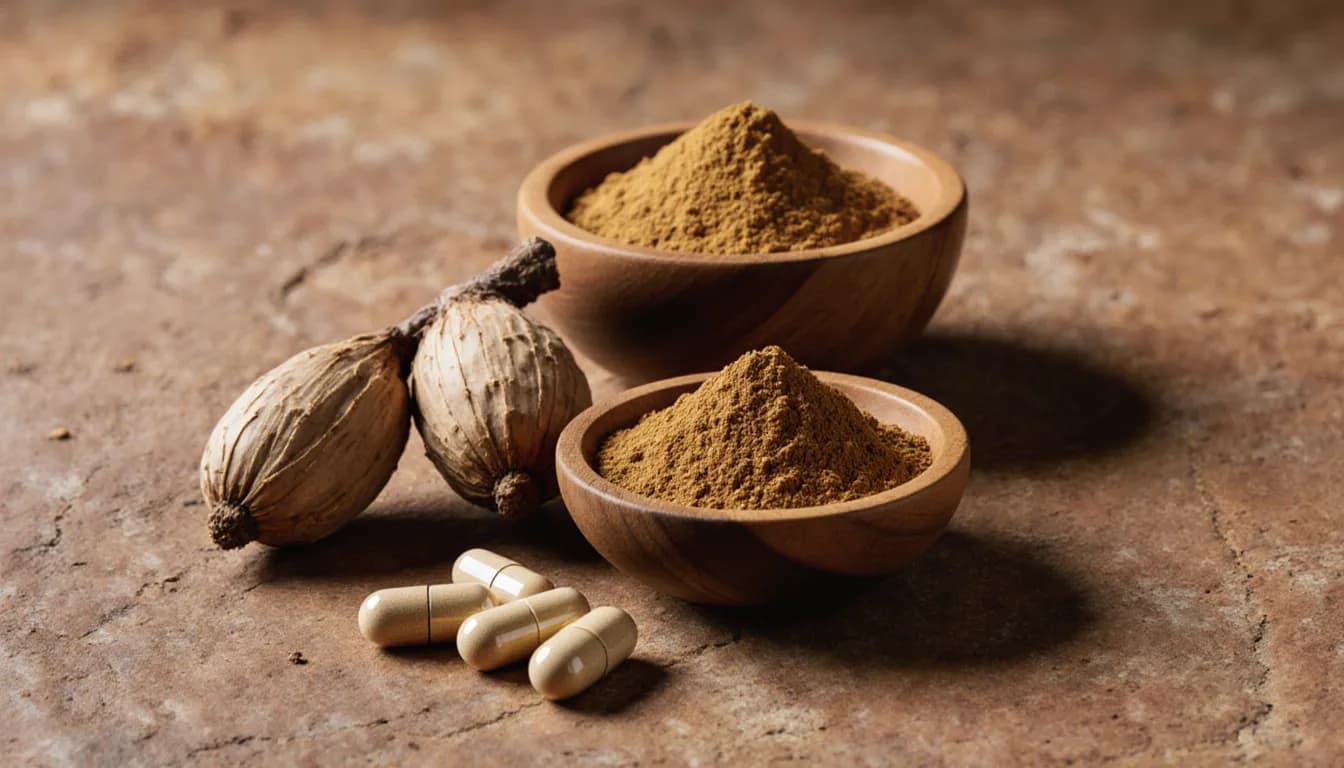
Capsules with standardized extract are generally the most convenient and consistent option. Ashwagandha powder (churna) is the traditional form and works, but the taste is quite bitter and earthy — difficult to mask without mixing into something like milk or a smoothie. Tablets are fine as long as the extract is standardized.
Beware of Proprietary Blends
Some Pakistani supplements include ashwagandha in a “proprietary blend” alongside five other herbs, with the total blend weight listed but not the individual ingredient amounts. This makes it impossible to know if you are getting a therapeutic dose. Stick to products where the ashwagandha content is clearly stated.
How Long Does Ashwagandha Take to Work?
This is one of the most common questions, and the honest answer is: it depends on what you are trying to achieve.
- Sleep improvement: Some people notice better sleep quality within 1-2 weeks
- Stress and anxiety reduction: Most studies show significant effects at 4-8 weeks
- Testosterone and fertility effects: 8-12 weeks of consistent use in the research
- Thyroid effects: 8 weeks minimum in the studies that showed results
- Physical performance: 6-8 weeks of training alongside supplementation
The key word is consistent. Ashwagandha is not an acute drug you take and feel immediately. It works by gradually modulating cortisol, HPA axis function, and hormonal signaling over weeks. If you take it for three days and feel nothing, that is completely expected — you need to stick with it.
Ashwagandha and Other Supplements: What Pairs Well
Ashwagandha works well alongside several other supplements commonly taken in Pakistan:
- Magnesium glycinate — both support sleep and stress reduction through complementary pathways
- Vitamin D3 — Vitamin D deficiency (extremely common in Pakistan) reduces testosterone production; fixing D3 levels enhances ashwagandha’s testosterone effects
- Zinc — supports testosterone synthesis; pairs naturally with ashwagandha for men’s hormonal health
- X-fit — ashwagandha’s adaptogenic stress reduction complements X-fit’s targeted male vitality formula
- Trimo-M — for men specifically targeting testosterone optimization, ashwagandha adds the cortisol-lowering dimension that standalone testosterone boosters lack
What you generally do not need to combine: multiple adaptogens at once. Ashwagandha and rhodiola, for example, can be taken together but the evidence for stacking adaptogens is thin. Start with ashwagandha alone, assess the effects, then layer if needed.
Side Effects: The Honest Picture
Ashwagandha is well-tolerated in the doses studied. The most commonly reported side effects are mild and gastrointestinal:
- Mild stomach upset, especially when taken on an empty stomach — take with food
- Loose stools in some individuals at higher doses (600mg+)
- Drowsiness if taken during the day — evening dosing is usually better for most people
- Very rarely: headache in the first week as cortisol patterns shift
There have been rare case reports of liver issues with very high doses or prolonged use of certain preparations. These are rare, but they are a reason to stick to recommended doses and take periodic breaks (cycle off for two to four weeks every three months if you are on long-term supplementation).
Ashwagandha in Pakistani Traditional Medicine vs Modern Use
There is something worth acknowledging here: traditional Unani practitioners in Pakistan have been using Asgandh for generations. The traditional formulations often combined it with milk (known as Asgandh Doodh) — and there is actually some science behind this. The fat content in milk appears to improve absorption of withanolides. If you can manage the taste, this traditional preparation is not just cultural habit — it is reasonably sound pharmacokinetics.
Modern standardized extracts in capsule form are simply more convenient and deliver a more precise dose. Both approaches work; the best one is the one you will actually stick to consistently.
Frequently Asked Questions About Ashwagandha in Pakistan
Can women take ashwagandha in Pakistan?
Yes, women can take ashwagandha. The benefits for stress, sleep, thyroid support, and energy apply equally. The main caution is during pregnancy — ashwagandha is contraindicated in pregnancy. Women with PCOS may find ashwagandha helpful for cortisol management, which indirectly affects androgens and insulin sensitivity, though it should complement rather than replace a targeted PCOS supplement like M-Sol (which contains myo-inositol).
Is ashwagandha halal?
Ashwagandha root extract itself is a plant-derived ingredient and is halal. The halal status of a specific supplement product depends on the capsule material (gelatin capsules may be bovine or porcine — look for vegetable cellulose capsules or halal-certified bovine gelatin) and whether any haram additives are present. Check the product label for halal certification if this matters to you.
What is the best time to take ashwagandha?
For most people, evening with dinner works well — it supports sleep and the calming effects are welcome at night. Some people prefer splitting the dose (half morning, half evening). If you are taking it primarily for daytime energy and stress management, morning with breakfast is fine. Experiment and see what works for your body.
How much does quality ashwagandha cost in Pakistan?
Prices vary considerably. Locally produced ashwagandha supplements range from Rs. 800 to Rs. 2,500 per month’s supply depending on the dose and extract quality. Imported branded extracts (KSM-66, Sensoril) are typically more expensive. A mid-range quality product with standardized extract should cost around Rs. 1,200 to Rs. 1,800 per month — anything significantly cheaper is likely whole herb powder with low withanolide content.
Can I take ashwagandha during Ramadan?
If taking capsules with food at Sehri or Iftar, yes — this is a common practice. Ashwagandha can actually help manage the cortisol spike that comes with prolonged fasting, and it may support energy levels during fasting days. Just ensure it is taken with food to avoid stomach discomfort.
The Bottom Line: Is Ashwagandha Worth It in Pakistan?
Honestly? For most Pakistani adults dealing with chronic stress, disrupted sleep, low energy, or concerns about testosterone — ashwagandha is one of the more evidence-backed natural supplements available. It is not a miracle, and it will not replace sleep hygiene, exercise, or a good diet. But as a complement to those foundations, the research is solid enough to take seriously.
The key is picking a quality product with standardized root extract, taking it consistently for at least six to eight weeks before judging effectiveness, and being aware of the contraindications if they apply to you.
Pakistan’s supplement market is maturing, and ashwagandha’s rise reflects a broader shift toward evidence-based natural health approaches. Whether you are dealing with post-Ramadan fatigue, work stress, gym recovery, or hormonal health concerns — this ancient herb has genuinely earned its place in the modern conversation. Explore Yellow Pink’s range of natural wellness supplements to find products that complement your ashwagandha regimen.
Liked this one? Get the next in your inbox.
One fortnightly note from the editors — new pieces, restocks, and the routines we're actually using. Unsubscribe any time.